20 Irish Visitor Attractions Every American Should See at Least Once
From ancient tombs and medieval castles to dramatic Atlantic cliffs, literary treasures and places that connect directly with Irish-American heritage, these are twenty experiences that deserve a place on every first-time visitor’s Ireland itinerary. Discover the 20 Irish Visitor Attractions Every American Should See at Least Once.
For many Americans, a trip to Ireland is more than a vacation. It can be a journey into family history, a chance to walk through landscapes remembered from stories, or simply an opportunity to experience a country that has occupied a remarkable place in American culture and imagination.
The island of Ireland offers an extraordinary combination of scenery, history, mythology, music and living culture. Some attractions are instantly recognisable; others reveal a deeper side of the country once you step through the gates.
We have chosen twenty that offer something particularly memorable for an American visitor — whether your interests are Irish ancestry, castles, literature, ancient history, spectacular landscapes or simply finding that perfect pint.
These attractions are part of the 20 Irish Visitor Attractions Every American Should See at Least Once list, each offering unique insights and experiences.
1. Cliffs of Moher, County Clare
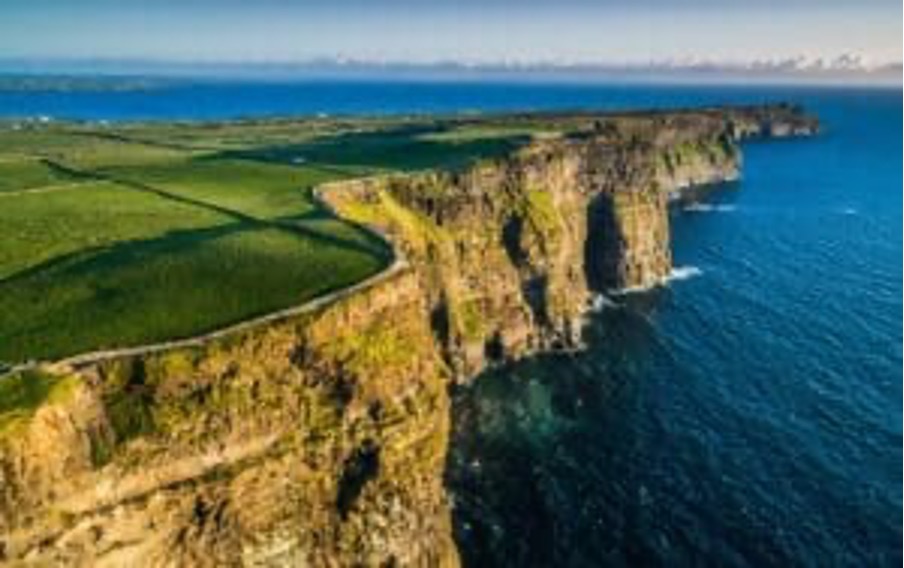
If there is one Irish landscape that belongs on every first-time visitor’s list, it is the Cliffs of Moher.
Rising dramatically from the Atlantic on County Clare’s Wild Atlantic Way, the cliffs stretch for around 8km, reaching approximately 214 metres at their highest point. They are part of the Burren and Cliffs of Moher UNESCO Global Geopark and are among Ireland’s most spectacular natural attractions.
For Americans arriving from a landscape of vast national parks and dramatic coastlines, the experience is wonderfully different. Here, the Atlantic is the dominant force. Stand at the edge, watch seabirds riding the wind and look across the ocean towards the Aran Islands.
Don’t miss: O’Brien’s Tower and the coastal walking routes.
2. Guinness Storehouse, Dublin
Ireland has produced many famous exports, but few are as internationally recognised as Guinness.
At the Guinness Storehouse at St James’s Gate, visitors can explore the history and craft of the famous stout through an immersive experience spread across seven floors. The visit culminates in the Gravity Bar, offering 360-degree views across Dublin.
For American visitors, the attraction is about much more than beer. Guinness is part of Ireland’s cultural story, and its advertising history is woven into popular culture around the world.
Don’t miss: The Gravity Bar and the story of Arthur Guinness’s famous 9,000-year lease.

3. Trinity College & the Book of Kells, Dublin
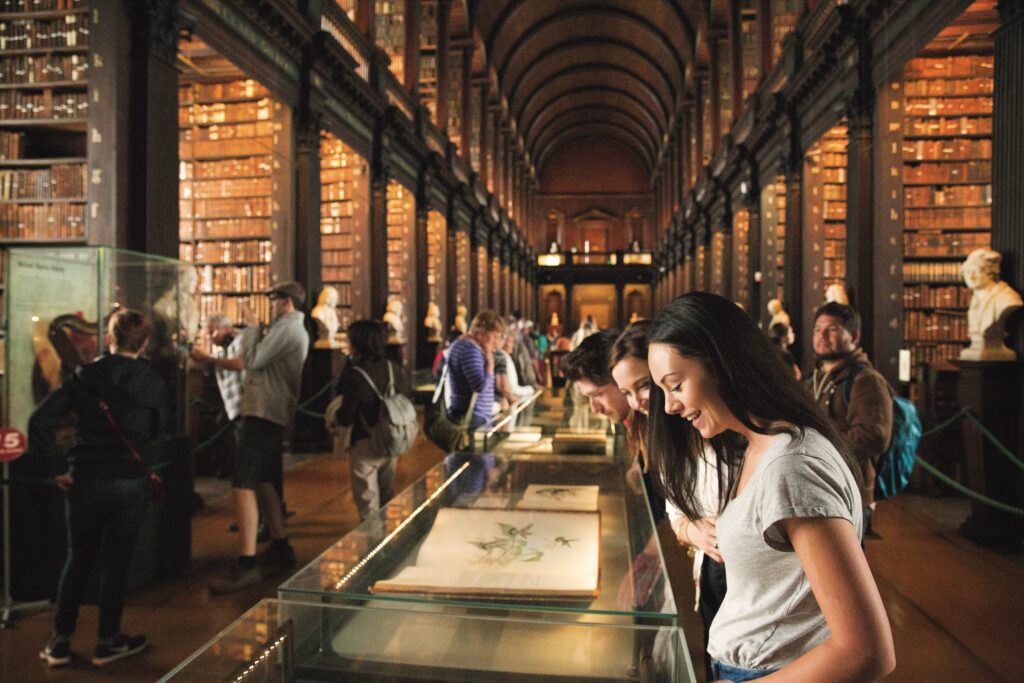
Few manuscripts have achieved the legendary status of the Book of Kells.
The beautifully illuminated Gospel manuscript, created around the eighth or ninth century, is preserved at Trinity College Dublin. The visit also traditionally includes the magnificent Long Room, one of Ireland’s most recognisable library interiors.
For visitors interested in Irish heritage, this is an extraordinary opportunity to come face-to-face with a manuscript created more than a thousand years ago.
And for Americans researching their Irish roots, Trinity makes a perfect starting point for exploring Dublin’s intellectual and cultural history.
4. Giant’s Causeway, County Antrim
Cross into Northern Ireland, and one of the island’s most extraordinary natural wonders awaits.
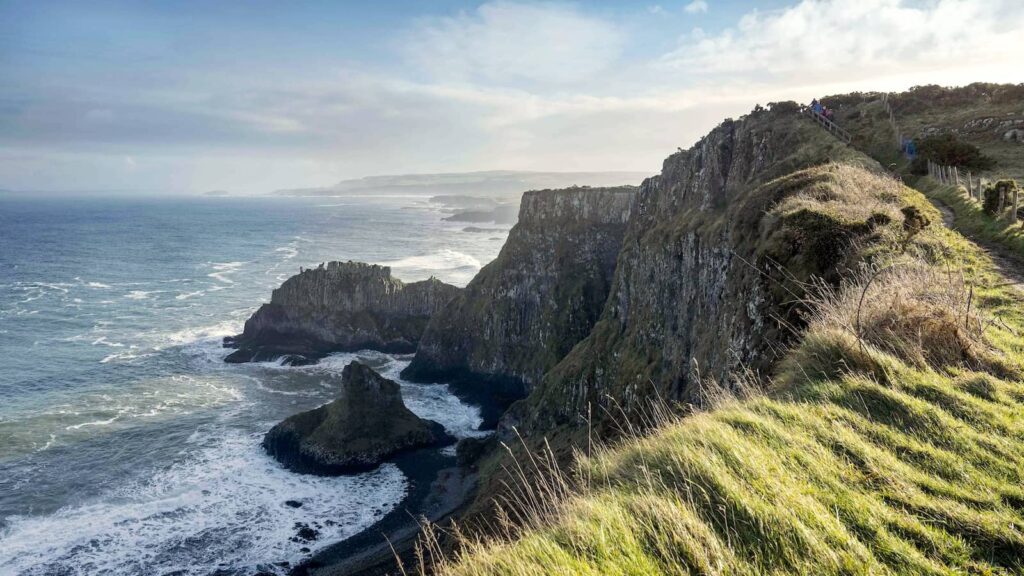
The Giant’s Causeway consists of more than 40,000 basalt columns created by volcanic activity around 60 million years ago. Science explains the formation; Irish mythology gives it a second identity through the legendary giant Fionn mac Cumhaill, or Finn McCool.
That combination of geology and storytelling is quintessentially Irish.
The Causeway is a UNESCO World Heritage Site and forms part of the spectacular Causeway Coast.
The story of the Titanic has an unusually strong connection with Ireland because the world’s most famous ship was built in Belfast.
Titanic Belfast tells the story of the ship, its construction and the people who built it, using immersive exhibitions within the striking building on the site of the former Harland & Wolff shipyard.
For American visitors, the attraction has a particularly powerful resonance. The Titanic story is deeply embedded in American popular culture, and many of the ship’s passengers were travelling towards the United States.
It is history told from the perspective of the place where the ship was created.
Image suggestion: Exterior of Titanic Belfast with the distinctive ship-shaped architecture.
6. Brú na Bóinne and Newgrange, County Meath
Long before Stonehenge, Ireland’s prehistoric builders were creating extraordinary monuments.
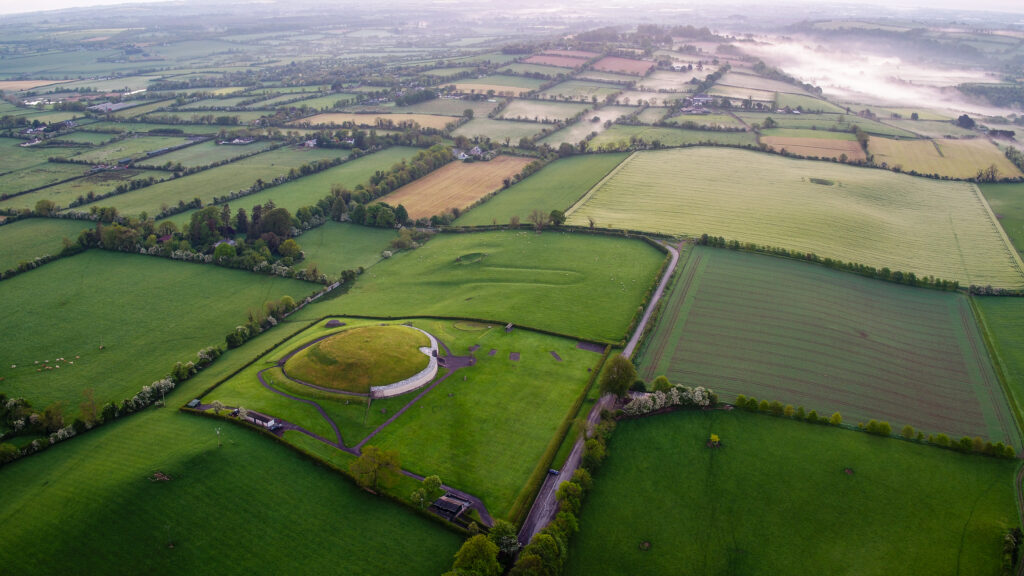
Brú na Bóinne is a UNESCO World Heritage Site containing an exceptional concentration of prehistoric passage tombs and megalithic art. Newgrange is the best known, dating back around 5,000 years.
Its great passage and chamber were constructed with remarkable astronomical precision. Around the winter solstice, sunlight enters through the roof box above the entrance and illuminates the chamber.
For Americans fascinated by ancient civilisations, Newgrange provides an extraordinary reminder that Ireland’s story began thousands of years before the castles and churches that dominate many tourist itineraries.
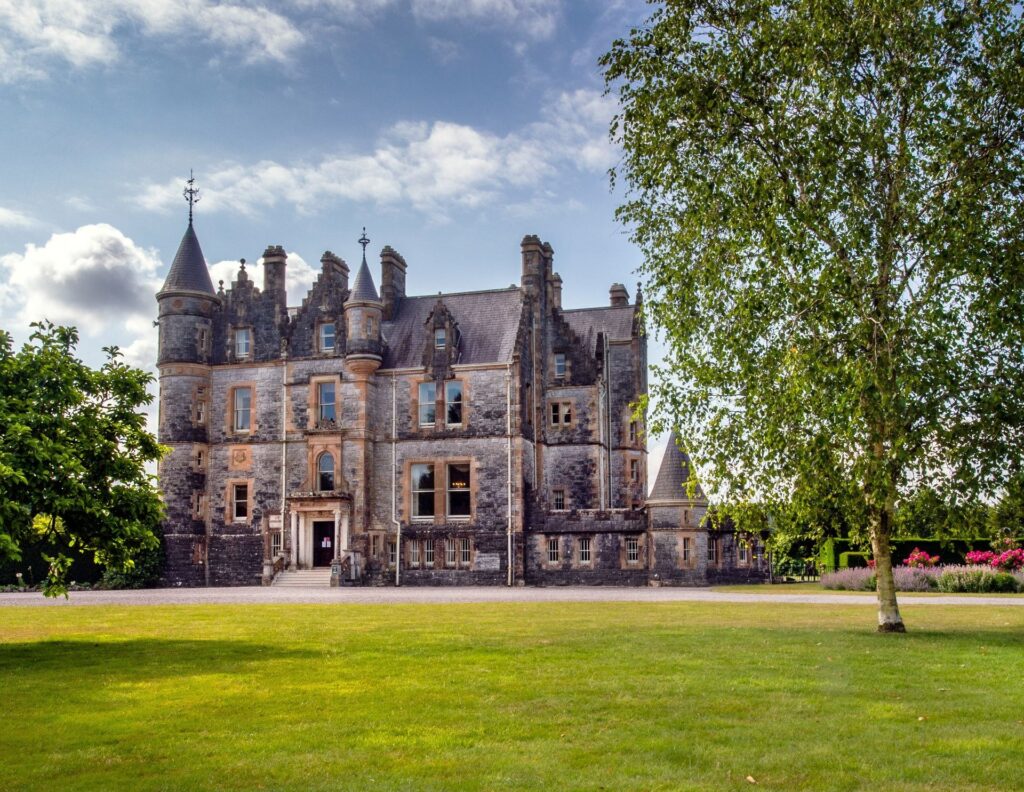
7. Blarney Castle, County Cork
There are castles, and then there is Blarney Castle.
Dating from the fifteenth century, Blarney is one of Ireland’s most famous castles and the home of the legendary Blarney Stone. Tradition says that kissing the stone grants the “gift of the gab” — the ability to speak with eloquence and charm.
The attraction works because it combines genuine medieval heritage with a wonderfully Irish sense of humour.
Climb the castle, explore the grounds and gardens, and decide for yourself whether you are brave enough to lean over backwards for that famous kiss.
8. Killarney National Park, County Kerry
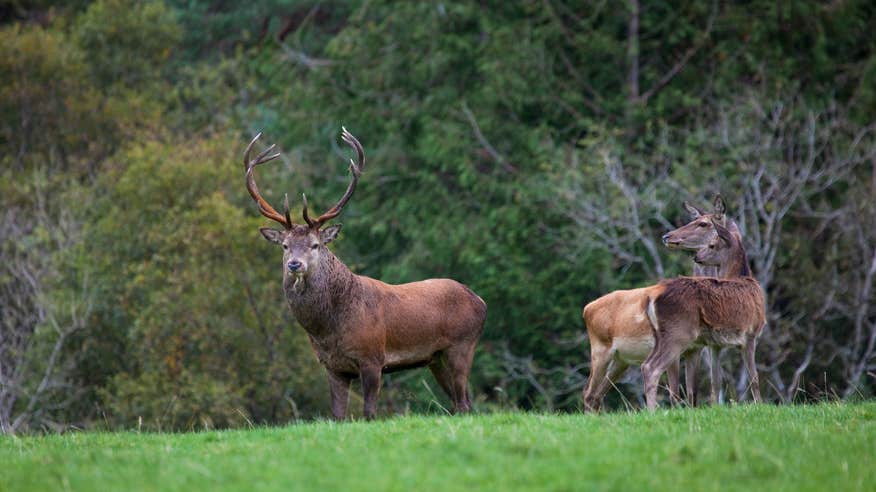
For many Americans, Killarney National Park delivers the Ireland they imagined before they arrived.
Mountains, lakes, ancient woodland, waterfalls and historic estates combine to create one of the country’s most beautiful landscapes. The park was established in 1932 and is recognised as a UNESCO Biosphere Reserve.
Take a boat on the lakes, explore by bicycle or discover the park on foot. The combination of wilderness and heritage is particularly impressive around Muckross House and the Lakes of Killarney.
9. Kilmainham Gaol, Dublin
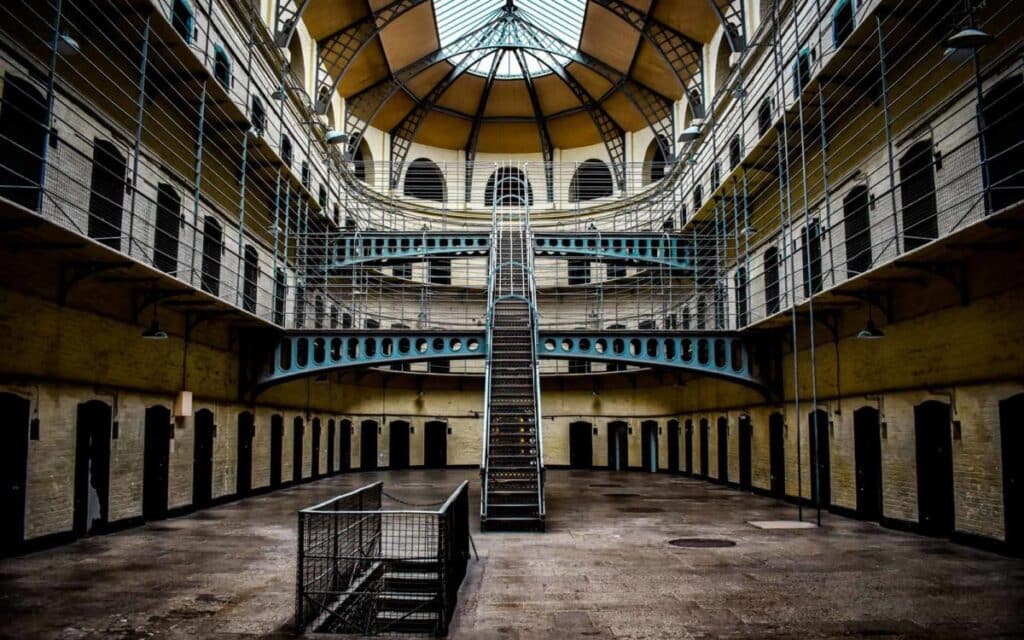
To understand modern Ireland, visit Kilmainham Gaol.
This former prison played a significant role in Irish history, particularly during the struggles surrounding independence. Many important figures in Irish revolutionary history were imprisoned there, and several were executed there.
It is an emotional experience, but an essential one for anyone wanting to understand how Ireland became an independent state.
For Americans whose ancestors left Ireland during the nineteenth and early twentieth centuries, the visit can provide valuable historical context for the Ireland their families left behind.
10. Rock of Cashel, County Tipperary
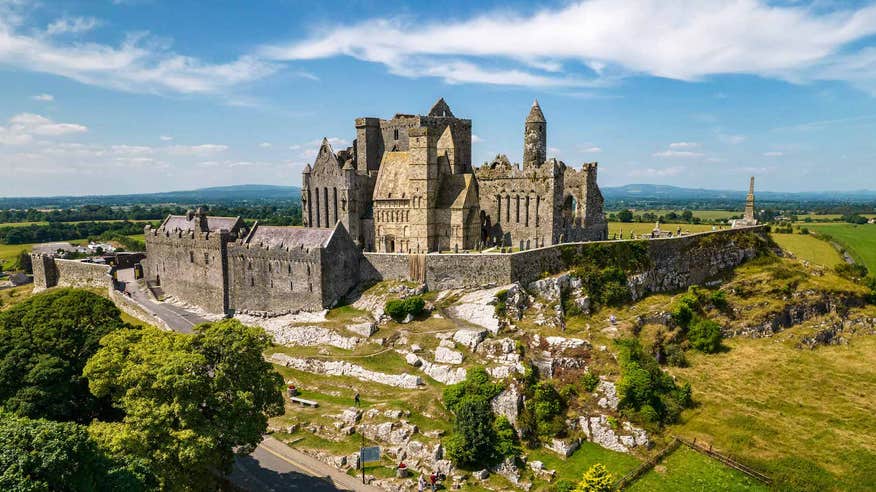
Rising dramatically above the Tipperary landscape, the Rock of Cashel looks almost cinematic.
Known historically as the Rock of Kings, the site contains an extraordinary collection of medieval buildings and has deep connections with Irish kings and St Patrick.
It is exactly the sort of place where Irish history feels tangible rather than something confined to a museum.
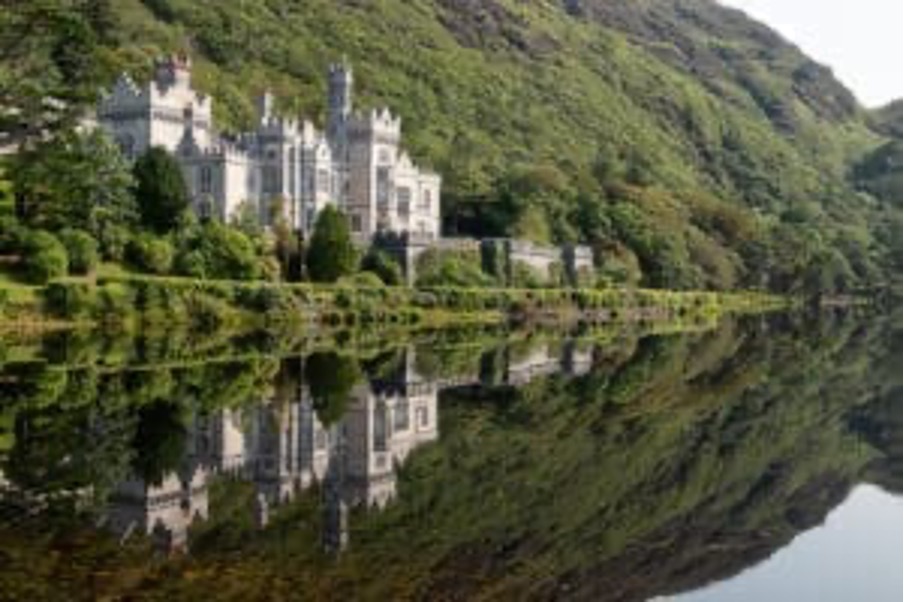
11. Kylemore Abbey, County Galway
Few buildings in Ireland have a more romantic setting than Kylemore Abbey.
Nestled beside Kylemore Lough amid the mountains of Connemara, the Victorian castle is one of Galway’s defining attractions. The site later became a Benedictine monastery, adding another chapter to its remarkable story.
For American visitors, Kylemore is particularly photogenic and offers the combination of architecture, gardens, history and landscape that makes a visit feel like stepping into a storybook.
12. Powerscourt Estate, County Wicklow
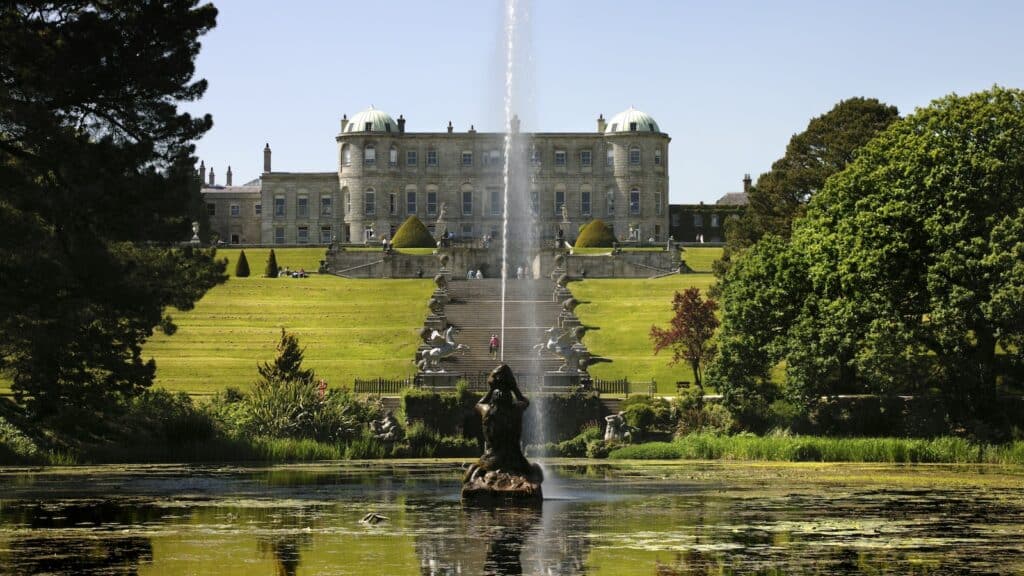
Known as the Garden of Ireland, County Wicklow is home to Powerscourt Estate.
The estate combines an impressive house and extensive gardens with spectacular views towards the Sugar Loaf and Wicklow Mountains. Powerscourt’s gardens are particularly rewarding for visitors who enjoy landscape design, architecture and photography.
Add the nearby Powerscourt Waterfall and you have one of the country’s finest day trips from Dublin.
13. Glendalough, County Wicklow
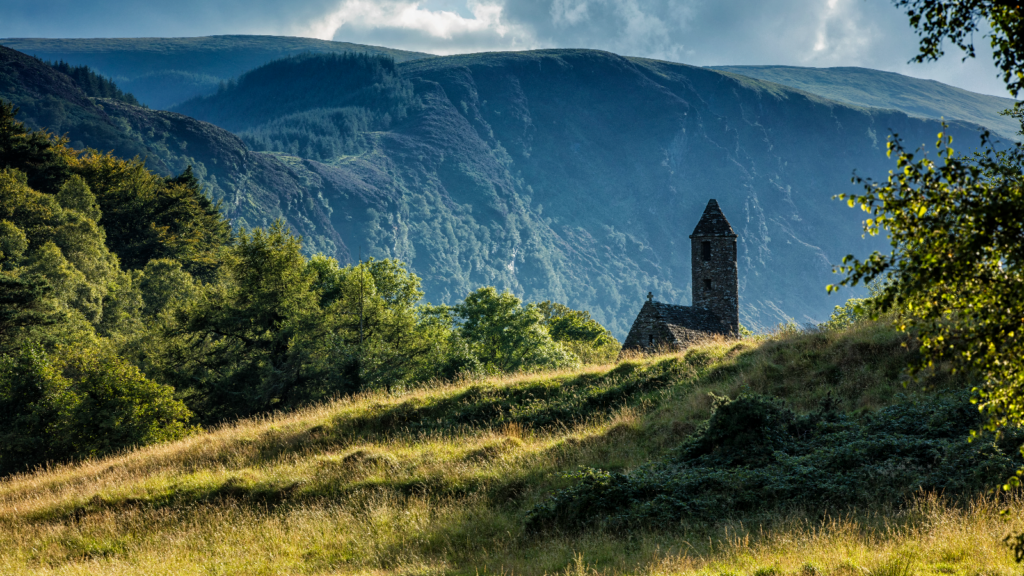
Deep in a beautiful Wicklow valley lies Glendalough, one of Ireland’s most atmospheric monastic sites.
Founded in the sixth century by St Kevin, the settlement developed into an important medieval centre. Today, the Round Tower, churches, lakes and surrounding mountains create one of the most evocative heritage landscapes in Ireland.
It is also a wonderful example of Ireland’s ability to combine nature and history in the same experience.
14. Bunratty Castle & Folk Park, County Clare
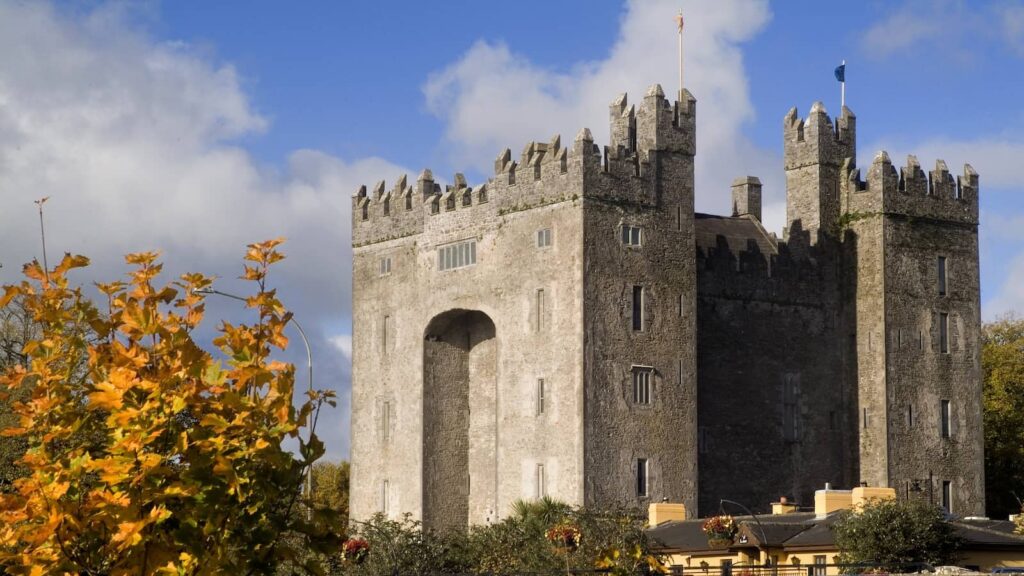
If you want to experience medieval Ireland and traditional Irish life in one stop, Bunratty Castle & Folk Park is difficult to beat.
The fifteenth-century castle dominates the site, while the Folk Park recreates aspects of nineteenth-century Irish life.
It is especially appealing to families and visitors looking for an interactive heritage experience rather than simply walking around historic ruins.
15. Skellig Michael, County Kerry
For adventurous travellers, few Irish experiences compare with Skellig Michael.
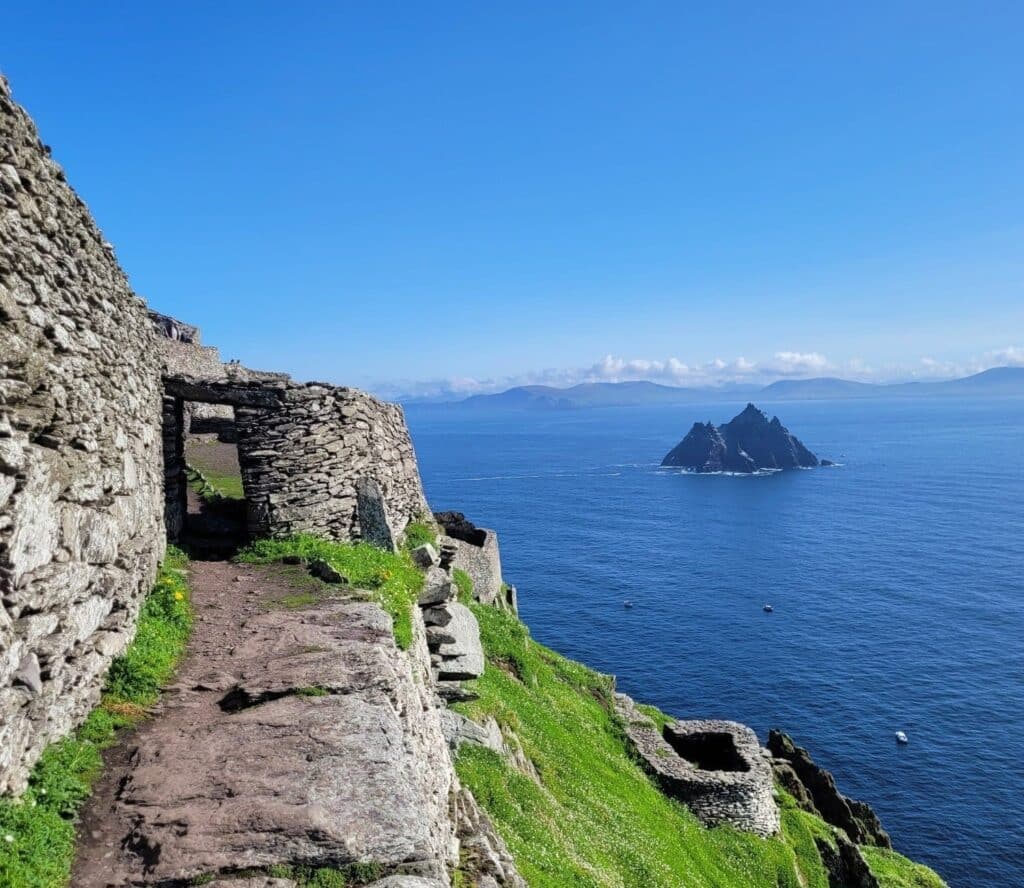
The extraordinary Atlantic island is home to the remains of an early Christian monastic settlement and is a UNESCO World Heritage Site. The monastery’s stone beehive huts sit dramatically above the ocean.
The island’s appearance in Star Wars also introduced Skellig Michael to an entirely new global audience.
However, this is not a conventional visitor attraction. Landing trips are weather-dependent and seasonal, and access involves a challenging climb.
16. Dublin Castle
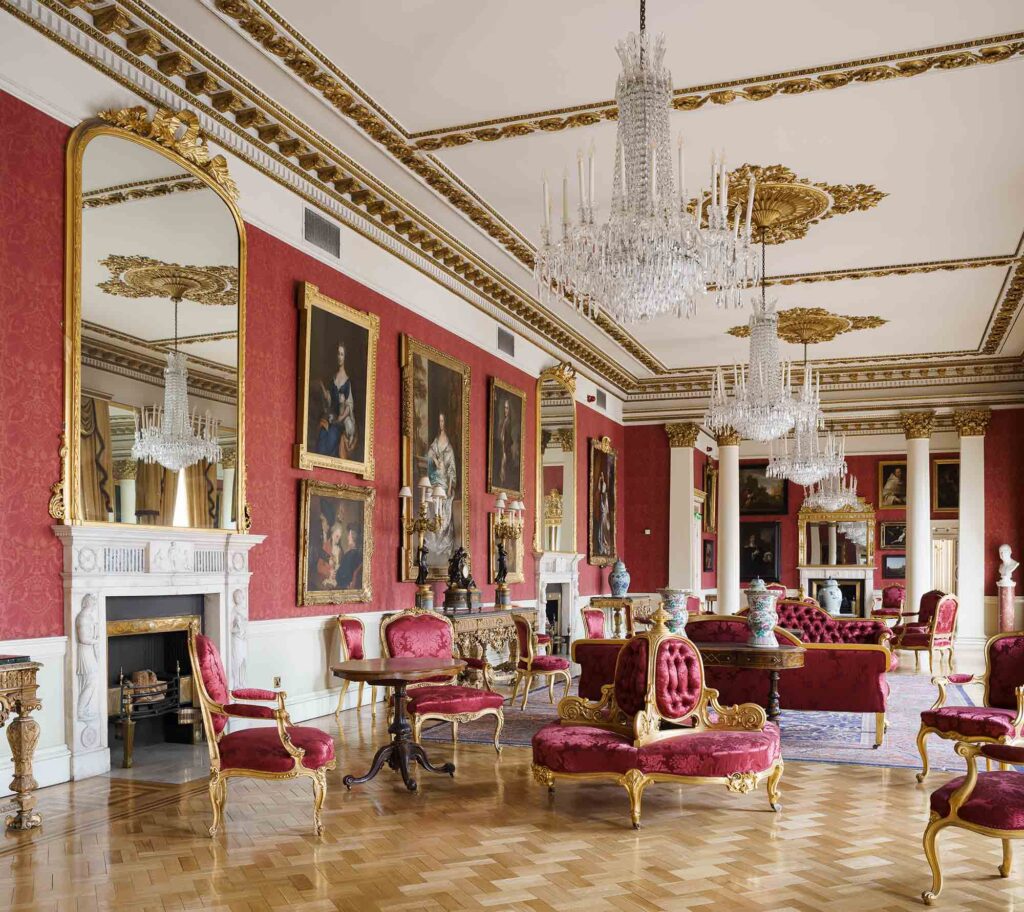
At the heart of the capital, Dublin Castle provides a remarkable window into Ireland’s political history.
The complex dates back to the medieval period and evolved into an important centre of British administration before becoming part of the story of the independent Irish state. Today visitors can explore historic rooms, courtyards, gardens and the medieval remains.
It is an excellent complement to Kilmainham Gaol because the two attractions tell very different parts of the same national story.
17. Malahide Castle, County Dublin
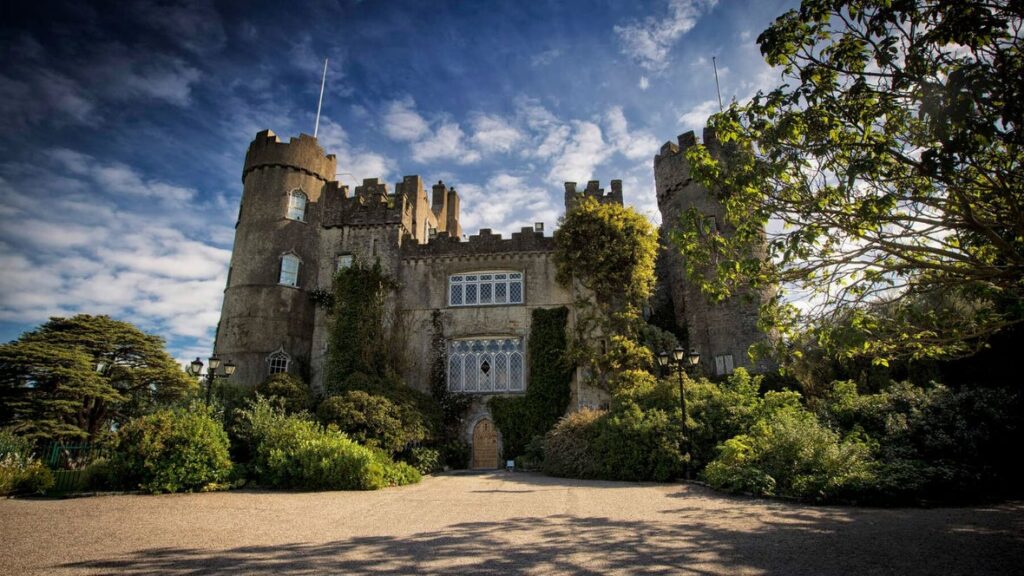
Just outside Dublin, Malahide Castle combines almost everything visitors love about Ireland: an historic castle, gardens, woodland and an extraordinary family history.
The castle’s story stretches back centuries, while the surrounding demesne provides space to explore away from the city.
It is an easy addition to a Dublin itinerary and works particularly well for families.
18. Fota Wildlife Park, County Cork
Ireland isn’t only about castles and ancient monuments.
Fota Wildlife Park, on Fota Island in Cork Harbour, offers a very different experience, with large open spaces and a range of wildlife. The park was established in 1983 and is particularly popular with families.
It makes an excellent stop when travelling through Cork and is an easy way to introduce children to wildlife and conservation.

19. The Dingle Peninsula, County Kerry
Strictly speaking, the Dingle Peninsula is a destination rather than a single attraction — but it deserves a place on this list.
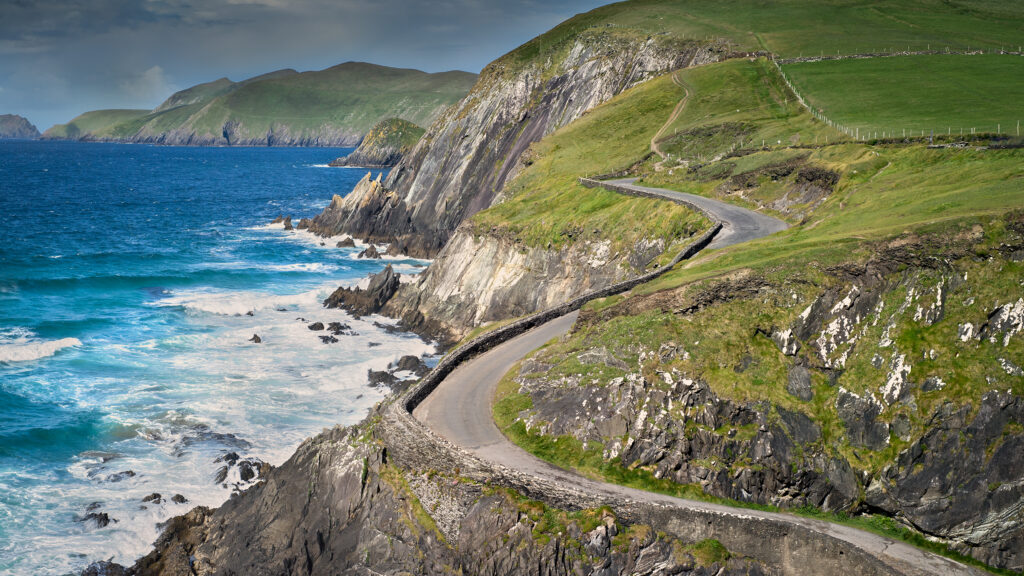
This is where the Ireland of dramatic Atlantic scenery, ancient monuments, stone walls, beaches and traditional culture comes together.
Drive the Slea Head route, stop at viewpoints overlooking the Blasket Islands, explore Dingle town and take time to experience the local food and music scene.
For American visitors, Dingle can feel like the Ireland they came to discover — but with the opportunity to slow down and explore rather than simply tick off attractions.
20. EPIC The Irish Emigration Museum, Dublin
For an American audience, I’m deliberately ending with EPIC — The Irish Emigration Museum.
Why?
Because for millions of Americans, the Irish story is also their story.
EPIC explores the experiences of Irish emigrants and the influence they have had around the world. Ireland’s official tourism guide specifically highlights the museum as one of Dublin’s major attractions.
For anyone who has ever asked, “Where in Ireland did my family come from?”, this is an especially worthwhile stop.
The experience can also be combined with genealogical research elsewhere in Dublin, potentially turning a holiday into a genuine journey of discovery.

The Ireland You’ll Remember
There is a temptation when planning an Irish holiday to try to see everything.
Don’t.
Ireland rewards the traveller who leaves enough time to stop, explore and talk to people.
A visit to the Cliffs of Moher is unforgettable, but so is finding a tiny village pub afterwards. Newgrange may tell a 5,000-year-old story, but the person explaining your family’s county history over dinner may leave an equally lasting impression.
And for Americans with Irish ancestry, that connection can be especially powerful.
Ireland isn’t simply a collection of attractions. It is a living story — written in stone walls, ancient monuments, castles, churches, landscapes, music, food and the people who continue to live here.
The best Irish holiday therefore isn’t about seeing twenty places as quickly as possible.
It is about finding the few places that make you stop and think:
“This is where my story began.”