
 |
|
|
|
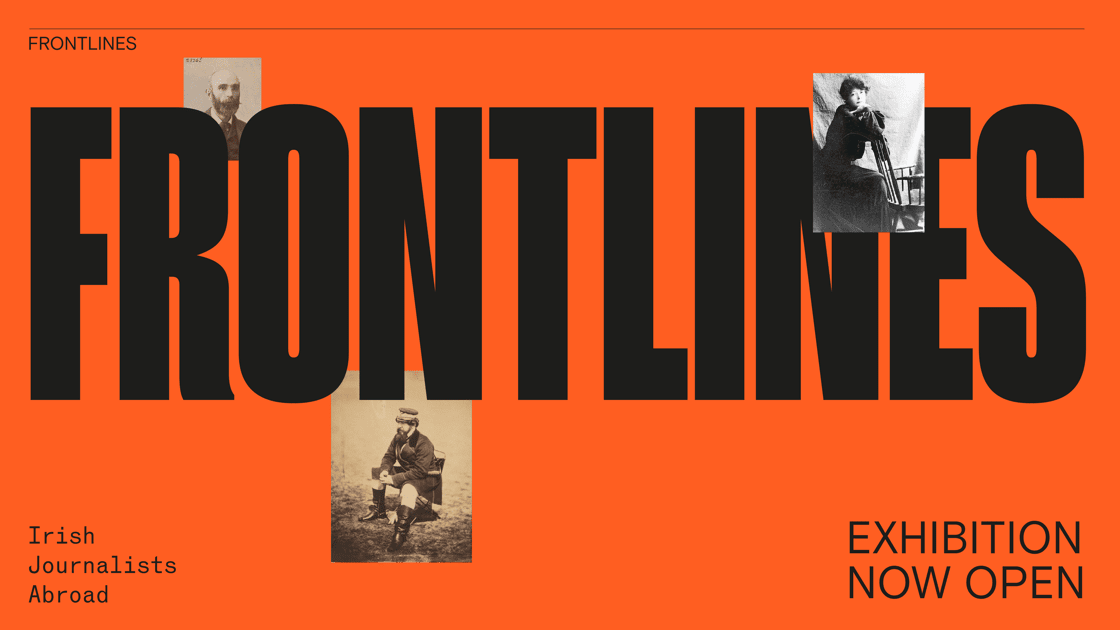
Opening on October 10th is EPIC’s newest exhibition – Frontlines: Irish Journalists Abroad. Supported by the Department of Foreign Affairs and Trade, this temporary exhibition showcases the powerful stories of Irish reporters whose work has shaped world events and reshaped perceptions of Irish identity worldwide. Running until the end of March 2026, Frontlines shines a light on the courage, integrity, and impact of journalists who brought untold stories to public attention, challenging political consensus and foregrounding marginalised voices. |
|
Featured Journalists
|
-4.png?width=1120&upscale=true&name=Untitled%20design%20(8)-4.png) |
|
Travel typewriter belonging to Des Mullan (1931 – 2021) |
|
Historian-in-Residence and exhibition curator Dr Catherine Healy says this of the exhibition: “Across the world, Irish journalists have worked to reveal human rights abuses and hold the powerful to account. Their reporting on conflict, famine, and hardship has shaped public opinion and provided an impetus for change. They have chronicled the lives of people on the margins and brought home the realities of inequality. In the major centres of Irish settlement, they have challenged negative stereotypes and helped immigrants adapt to their adopted homelands. And they have, in some cases, entirely refashioned what it means to be of Ireland, crafting new identities in New York, Paris, and Buenos Aires.” |